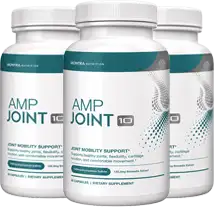
Cartilage structure gets a lot of attention in joint-support conversations, but structure is only part of the picture. Joints also need to move smoothly against each other — and that's a question of lubrication, not just structure. In AMP Joint 10, that job belongs to a single ingredient: Hyaluronic Acid, the formula's entire "joint lubrication" dimension.
What Is Synovial Fluid?
Many joints in the body — knees, hips, shoulders, and others — are surrounded by a thin layer of fluid called synovial fluid. This fluid sits between the cartilage surfaces of a joint and helps reduce friction as the joint moves. Synovial fluid's ability to do this depends heavily on its viscosity — essentially, how thick and slippery it is.
Where Hyaluronic Acid Fits In
Hyaluronic acid is described in the supplied AMP Joint 10 product information as a structural component of synovial fluid, helping to provide the viscosity and cushioning that make smooth joint movement possible. This is why hyaluronic acid is so closely associated with the concept of joint lubrication rather than cartilage structure directly — its role is about the fluid environment around the joint, not the cartilage tissue itself.
In AMP Joint 10, this positions Hyaluronic Acid as a complement to the formula's structural ingredients (glucosamine, chondroitin, and Collagen Type II) rather than a substitute for them. Structure and lubrication are treated as two separate needs within the broader four-dimension approach — see the full breakdown on the ingredients page.
Cushioning and Everyday Movement
Because synovial fluid's viscosity affects how joints absorb impact during everyday movement — walking, climbing stairs, standing up from a chair — lubrication is often discussed alongside mobility and comfort rather than as a standalone topic. The supplied source frames hyaluronic acid's inclusion in AMP Joint 10 around exactly this: supporting the lubrication and cushioning side of joint comfort as part of a broader daily formula.
What Hyaluronic Acid Does Not Claim to Do
It's worth being clear about scope. The supplied product information does not claim that hyaluronic acid — on its own or as part of AMP Joint 10 — regrows cartilage, reverses joint degeneration, or eliminates joint pain. It's positioned as a nutritional-support ingredient tied to the lubrication side of joint wellness, consistent with the formula's broader dietary-supplement framing rather than a medical-treatment framing.
How Lubrication Fits the Bigger Picture
Joint lubrication is one of AMP Joint 10's four dimensions, alongside cartilage structure, anti-inflammatory support, and maintenance and absorption. To see how the structural ingredients work alongside hyaluronic acid, read Glucosamine and Chondroitin for Joint Support, or get the complete formula walkthrough in the AMP Joint 10 Guide.
AMP Joint 10 Pricing

AMP Joint 10, which includes Hyaluronic Acid as its joint lubrication ingredient, is a one-time payment with no subscription, backed by a 60-day money-back guarantee.
Frequently Asked Questions
Does AMP Joint 10 contain hyaluronic acid?
Yes. Hyaluronic Acid is the sole ingredient in AMP Joint 10's joint lubrication dimension.
Is hyaluronic acid the same as glucosamine or chondroitin?
No. Hyaluronic acid is associated with synovial fluid and joint lubrication, while glucosamine and chondroitin are positioned around cartilage structure. AMP Joint 10 includes all three because they address different aspects of joint wellness.
How does hyaluronic acid support mobility?
By supporting the viscosity and cushioning associated with synovial fluid, hyaluronic acid is positioned to support smoother joint movement as part of a comprehensive daily routine.